

Benefits
- Compact: JWTs are small in size, which makes them a good choice to be passed in HTML and HTTP environments.
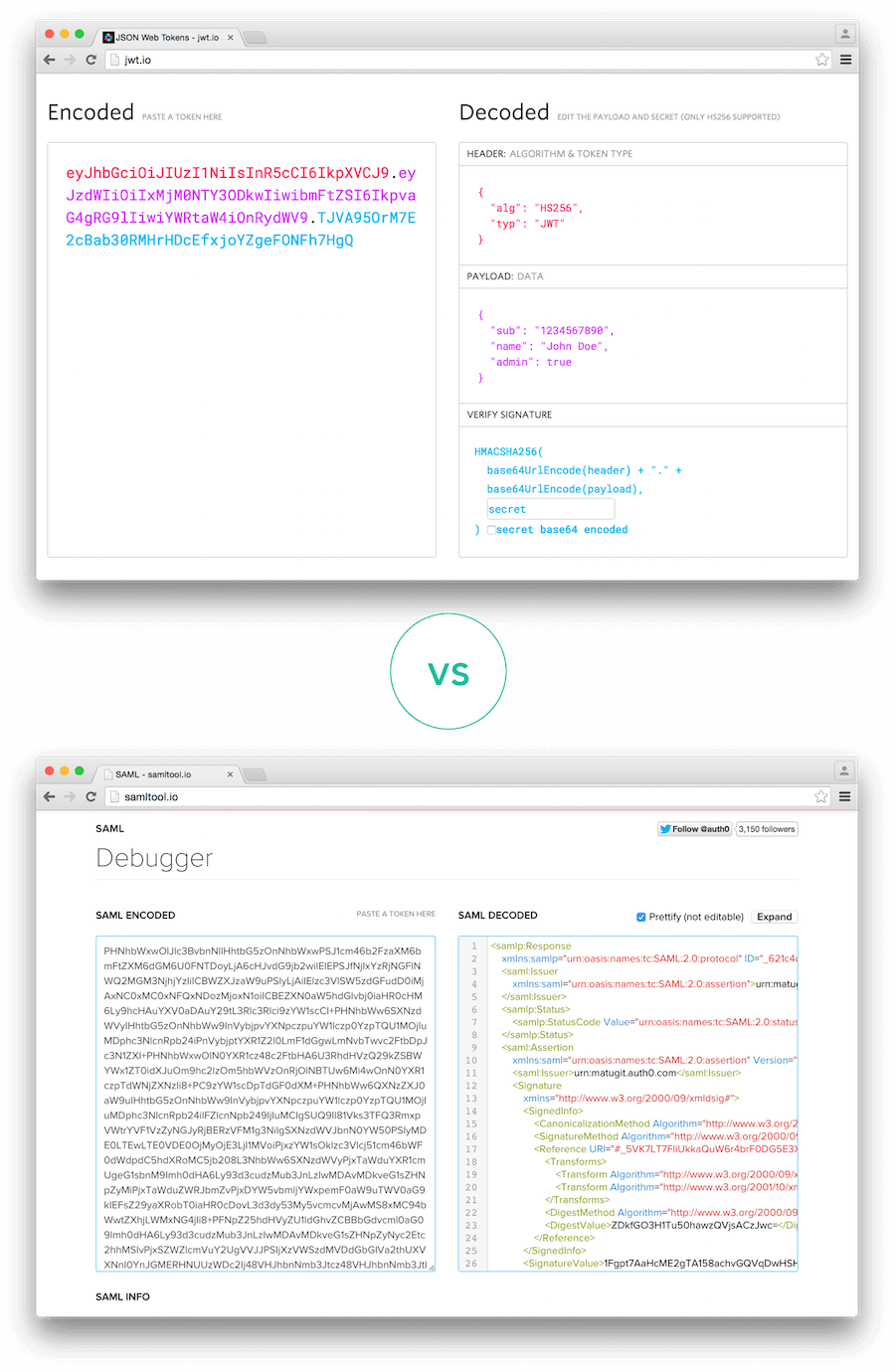
- Secure: JWTs can use a public/private key pair in the form of an X.509 certificate for signing. A JWT can also be symmetrically signed by a shared secret using the HMAC algorithm. To learn more, read Signing Algorithms.
- Common: JSON parsers are supported by most programming languages.
Usage
- Authentication: When a user successfully logs in using their credentials, an ID token is returned. According to the OpenID Connect (OIDC) specification, an is always a JWT.
- Authorization: Once a user is successfully logged in, an application may request to access routes, services, or resources (for example, APIs) on behalf of that user. To do so, the application must pass an in every request, which may be in the form of a JWT.
- Information exchange: JWTs are a good way of securely transmitting information between parties because they can be signed, which means you can be certain that the senders are who they say they are. Additionally, the structure of a JWT allows you to verify that the content hasn’t been tampered with.